Designing Sweet Spring Projects with Easter Candy Backgrounds
The Allure of a Professional Candy Aesthetic
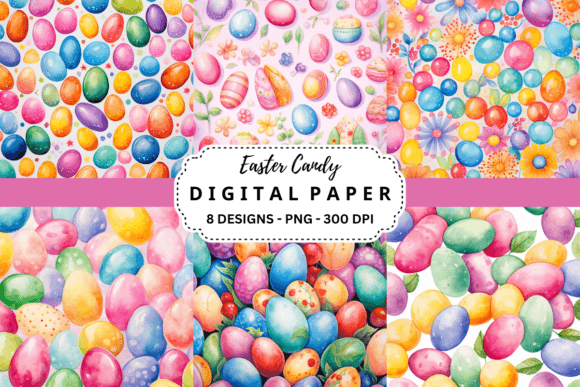
When working on seasonal campaigns, the visual foundation of your design often determines the entire mood of the piece. The Easter Candy Backgrounds collection offers a distinct solution for creators who need high-quality, whimsical textures without spending hours rendering 3D objects or photographing real candy. This set consists of 8 individual PNG files, each boasting a crisp 300 DPI resolution and a generous 3600 x 3600 pixel canvas. The visual personality of these assets is undeniably sweet and vibrant, capturing the essence of spring celebrations through a curated arrangement of confectionery elements.
Unlike generic stock photos, these backgrounds are designed as seamless textures. The composition balances color and shape to ensure that the "sweetness" doesn't overwhelm the viewer. From a design perspective, this creates a versatile premium font—or in this case, a premium background—that can serve as a hero element or a subtle texture. The style leans into modern typography trends where bold, colorful backgrounds are paired with minimal, clean text to create high contrast. Whether you are working on logo design for a bakery or social media graphics for a boutique, the consistent 3600px width ensures that your visuals remain sharp across both digital screens and large-format print on demand design projects.
Strategic Applications for Branding and Marketing
For entrepreneurs and small business owners, the challenge of seasonal marketing is often the time constraint. You need to pivot your visual identity for spring without compromising your established brand identity. This is where the Easter Candy Backgrounds truly shine. Because the files are high-resolution PNGs, they are incredibly adaptable for packaging design. Imagine using these textures for the back panel of a chocolate box or as a wrap for a holiday candle. The 300 DPI quality ensures that the printing process yields crisp, professional results, avoiding the pixelation that often plagues lower-quality design assets.
In the realm of editorial design and publishing, these backgrounds offer a way to create thematic consistency across multiple pages. If you are a blogger or publisher creating a digital magazine or a printed lookbook, you can use the same background across the cover, the table of contents, and the dividers to create a cohesive visual journey. This approach mimics the consistency found in a well-designed typeface, where every letterform belongs to the same family. By using the candy backgrounds as a recurring motif, you build visual recognition, which is a cornerstone of effective brand identity management.
Enhancing Digital Presence and Engagement
Digital content creators and marketers know that engagement often hinges on the "thumb-stopping" power of an image. On platforms like Instagram or Pinterest, a flat color background can sometimes feel sterile. Introducing the texture of Easter Candy Backgrounds adds a tactile quality to digital assets. This is particularly effective for social media post template design. By placing bold, sans-serif typography over a busy candy background, you create a dynamic font pairing situation where the texture of the background plays off the sharpness of the text.
However, readability is the critical factor here. When using a textured background like this, the visual hierarchy must be managed carefully. It is rarely advisable to place long-form body copy directly onto a busy pattern. Instead, use these backgrounds for headers, hero images, or as a frame around a clean text box. This technique allows you to leverage the playful energy of the candy without sacrificing the legibility of your message. For web design, these files work exceptionally well as section breakers or footer backgrounds, adding a seasonal flair to a user interface without cluttering the main navigation.
Practical Execution for Diverse Projects
The versatility of the Easter Candy Backgrounds extends far beyond standard marketing. Scrapbooking and invitations card design are natural fits for this style. Because the images are provided as individual PNGs, they can be easily layered in software like Adobe Photoshop or Canva. For a wedding invitation suite, for example, you might use a soft-focus candy background for the envelope liner and a more vibrant section for the RSVP card. This creates a sophisticated font pairing strategy where the visual elements support the formal script fonts often used in stationery.
For those in the fashion industry or print on demand sectors, the application is equally broad. These textures are ideal for creating mockups. If you are selling tote bags, t-shirts, or pillowcases, you can use these backgrounds to simulate a "pattern" look. The high resolution allows for significant cropping, meaning you can zoom in on a specific section of the candy arrangement to create a different visual texture, effectively giving you more than just 8 options from this set.
Choosing and Evaluating Your Assets
When integrating these assets into your workflow, treat them with the same scrutiny you would apply to choosing a creative font. Evaluate the color palette of the backgrounds against your existing brand colors. Do the pastels in the candy complement your primary hues, or do they clash? Often, the best approach is to use the background as the dominant color source and pull your text colors directly from the image. This ensures a harmonious palette that feels curated rather than accidental.
Furthermore, consider the "weight" of the design. A busy background requires a heavy, bold typeface to anchor it. Pairing these candy textures with a delicate, thin script font might result in a design that feels lost or chaotic. Instead, look for a modern typography style—a bold sans serif font or a thick slab serif—to ensure your message cuts through the visual noise. Ultimately, these Easter Candy Backgrounds are powerful design assets, but like any tool, their success depends on how thoughtfully they are applied to support your specific project goals and audience expectations.